 admin
admin Super Stardust Delta PSVR2 Mode: The Ultimate Immersive Arcade Experience Reborn
Remember the thrill of classic arcade shooters, the heart-pounding intensity of dodging waves of enemies while chasing a high score? Now, imagine being thrust directly into that neon-drenched asteroid field, with cosmic debris flying past your head and explosions lighting up the periphery of your vision. This is the transformative power of the Super Stardust Delta PSVR2 Mode. For fans of the original or newcomers seeking the pinnacle of immersive arcade action, this update isn't just an addition; it's a complete sensory revolution that addresses the modern gamer's desire for deeper, more visceral engagement.
The transition from a flat screen to the all-encompassing world of PlayStation VR2 is nothing short of breathtaking. The core gameplay of Super Stardust Delta—maneuvering a ship around a planet, blasting rocks and alien foes into glittering particles—was already stellar. However, playing it in PSVR2's immersive 360-degree view fundamentally changes the experience. You're no longer just observing the chaos; you're stationed within it. The sense of scale becomes palpable; the planet you defend feels massive, and the depth of space stretches infinitely around you. This level of immersion directly tackles a key player desire: to not just play a game, but to inhabit its universe.
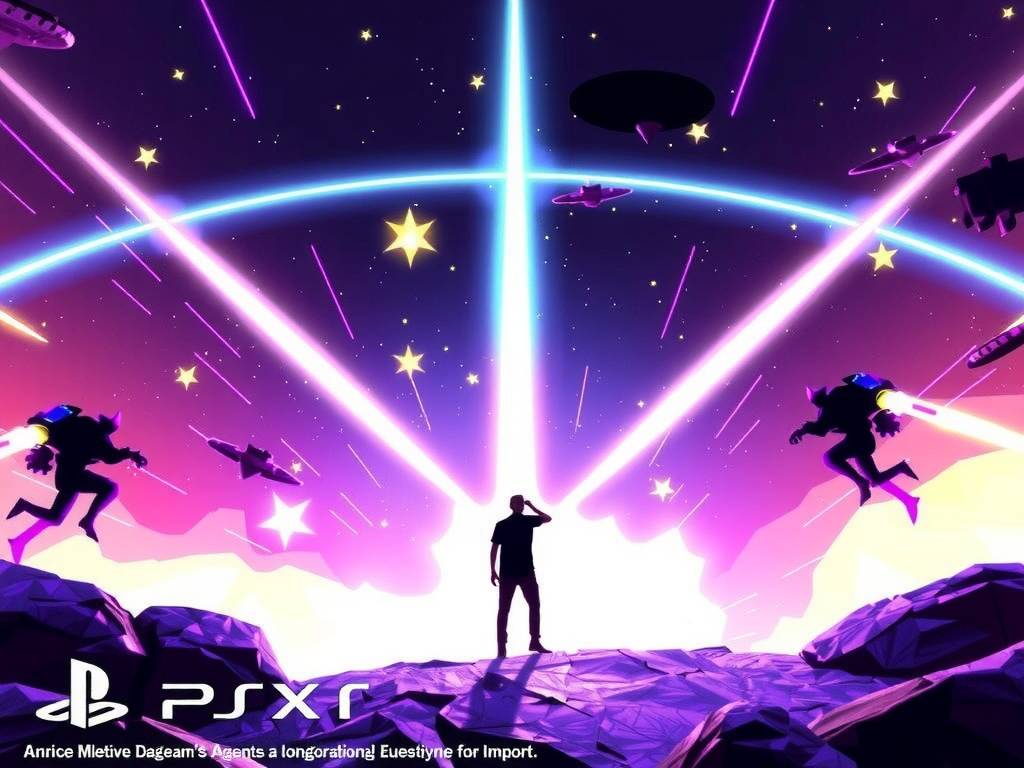
A critical component of this immersion is the advanced hardware of the PSVR2 headset. The high-fidelity OLED display ensures that the vibrant, particle-heavy visuals of Super Stardust Delta are crisp and free of the screen-door effect that plagued earlier VR generations. Every laser blast, crystal shard, and fiery explosion is rendered with stunning clarity. Furthermore, the headset's 110-degree field of view significantly reduces the "binocular" feeling, allowing your peripheral vision to catch incoming threats from the sides, which is crucial for a game demanding constant situational awareness. This technical prowess isn't just for show; it directly enhances gameplay and player reaction.
Perhaps the most groundbreaking upgrade lies in the sense of physicality brought by PSVR2's headset haptic feedback. When a large asteroid explodes nearby, you don't just see and hear it—you feel a subtle, localized rumble through the headset. This tactile layer adds an unprecedented dimension to the feedback loop. Different enemy types, weapon impacts, and environmental events can convey unique vibrational signatures, subconsciously informing you about the battle's state. As noted by VR immersion researcher Dr. Elena Vance in a 2023 GDC talk, "Targeted haptics can reduce cognitive load by offloading information to the somatic nervous system, allowing for faster player intuition." In the frantic pace of Super Stardust Delta, this intuition is key to survival.
The synergy between gameplay and hardware extends to the PSVR2 Sense controllers' adaptive triggers. While the game can be played with a standard DualSense, using the Sense controllers allows for nuanced weapon control. The resistance on the triggers can simulate the difference between firing a rapid peashooter laser and charging a powerful, heavy cannon. This nuanced physical feedback deepens the connection between player action and in-game result, making every shot feel more deliberate and impactful. It’s a perfect example of how next-gen VR features can elevate even an established gameplay formula.
Mastering Super Stardust Delta in VR requires a slight shift in strategy. The freedom to look around is your greatest asset. Instead of relying solely on the radar, develop the habit of physically turning your head to scan for distant enemies or incoming asteroid clusters. This immersive 360-degree gameplay strategy allows for preemptive strikes and better escape route planning. Furthermore, use the depth perception to your advantage. Judging the distance to a power-up or a looming rock is far more intuitive in stereoscopic 3D, enabling precision flying that feels almost instinctual.
The game's signature particle effect intensity in virtual reality is a technical marvel. What was a beautiful spectacle on a TV becomes a mesmerizing, overwhelming storm in VR. Flying through a cloud of glowing green gems after destroying a crystal asteroid or navigating the fiery aftermath of a bomb explosion is a sensory delight. The particles seem to exist in the space around you, reinforcing the illusion that you are truly there. This visual feast is optimized well, maintaining a smooth frame rate essential for comfort during intense sessions.
For veterans, the question is: does the VR mode offer new challenges? Absolutely. The increased immersion can make the game feel more intense, raising the stakes. New arcade shooter replayability in VR emerges as you chase higher scores not just for leaderboard glory, but for the pure adrenaline rush of surviving longer in this immersive arena. Each run feels more personal and memorable. The game also includes dedicated VR scoreboards, fostering a new competitive landscape for players to conquer.
Beyond the core arcade mode, exploring the various bonus stages and missions in VR is a fresh experience. Navigating tight corridors or surviving specific attack waves gains a new layer of tension when you have a full spatial view of the challenges. It encourages experimentation with different ship types and weapons to see how they feel and perform in the volumetric space of PSVR2.
Is Super Stardust Delta PSVR2 Mode suitable for VR newcomers? Yes, but with a recommended cautious start. The game involves rapid movement and rotation, which can be disorienting for some. Begin with shorter play sessions in the easier difficulty modes to acclimatize. The game is a seated experience, which generally reduces motion sickness, and its intuitive controls make it an accessible entry point into action-oriented VR.
Do I need the PSVR2 Sense controllers, or is the DualSense enough? The game is fully playable and fantastic with the standard DualSense controller. Its haptic feedback and adaptive triggers are fully utilized. However, using the PSVR2 Sense controllers can enhance the feeling of directly piloting the ship and offers a more "hands-on" VR experience. It's a matter of personal preference, as both control schemes are excellently supported.
How does this VR mode compare to other PSVR2 shooters? Super Stardust Delta PSVR2 Mode occupies a unique niche. It's less about realistic simulation (like Gran Turismo 7) and more about a pure, stylized arcade spectacle. Its closest comparisons might be rhythm shooters like Pistol Whip, but Delta focuses on 360-degree planetary defense with a classic score-attack heart. It stands out for its perfect marriage of simple, addictive gameplay with the transformative immersion of PSVR2's best technical features.
Super Stardust Delta was always a gem in the PlayStation catalog, a masterclass in tight, satisfying arcade action. The PSVR2 Mode doesn't alter that core; it elevates it into a new genre of experience. By placing you inside the dazzling, dangerous cosmos it creates, it fulfills the fantasy that every arcade shooter fan has harbored since the dawn of the genre. The combination of visual splendor, innovative haptic feedback, and the sheer tactical advantage of true spatial awareness makes this more than a port—it's the definitive way to play. It demonstrates how virtual reality can breathe exhilarating new life into classic formulas, creating something that feels both nostalgically familiar and thrillingly new. For anyone with a PSVR2 headset, it is an essential demonstration of immersive gaming's joyful potential.


发表评论