 admin
admin Imagine stepping into a dimly lit, hallowed hall. The air is cool and still, carrying the faint, elegant scent of aged leather and polished wood. Before you, under individually lit glass domes, rest masterpieces of human ingenuity. A Patek Philippe Grand Complication, its minuscule gears frozen in a beam of light. A vintage Rolex Daytona that once graced the wrist of a legendary racer. A breathtaking Vacheron Constantin métiers d'art piece, its enamel dial a miniature painting. You lean in, closer than any physical museum would allow, observing the gentle curve of the Breguet hands and the intricate guilloché pattern on the movement. This is not a dream, nor is it a physical location. This is the Watch Museum VR, the next frontier for luxury brand expansion, and it is fundamentally reshaping how we perceive, experience, and acquire high horology.
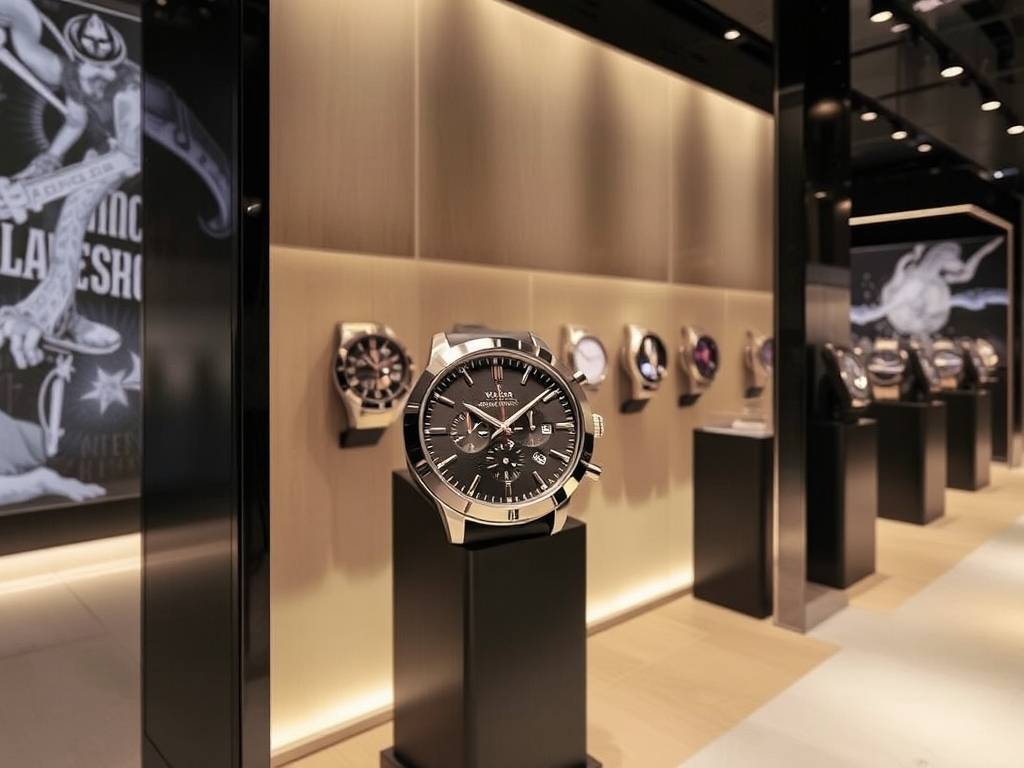
The traditional luxury watch world has long been governed by exclusivity. Access was granted through discreet boutiques on iconic streets like Rue du Rhône or Fifth Avenue, where the experience was as curated as the clientele. While effective, this model inherently limits its audience. An enthusiast in Tokyo, a collector in São Paulo, or a curious millennial in Berlin might never have the opportunity to engage with these historical artifacts and new creations in a meaningful, immersive way. The challenge for luxury brands has been to democratize access without diluting exclusivity, to educate a new generation without abandoning tradition. This is precisely where immersive technology provides an elegant and powerful solution. By constructing virtual watch museums, brands are building bridges across continents and generations. They are no longer merely selling a product; they are offering a key to a private cultural institution, an education in craftsmanship, and an emotional connection that transcends the limitations of a screen or a page.
The concept of a virtual museum is far more sophisticated than a simple 360-degree gallery view. It is a meticulously crafted digital ecosystem designed to tell a story. Upon entering, a user, represented by an avatar or navigating in first-person, finds themselves in an architectural marvel. Perhaps it’s a futuristic space with floating exhibits, or a recreation of the brand’s historic manufacture in the Swiss Jura mountains. The ambient sound design—a subtle, echoing chime, the distant sound of a ticking—sets the tone. The core of the experience lies in the interactivity. You don't just look; you engage. A gentle click on a watch from the 1920s allows you to "lift" it from its stand, rotate it in mid-air to admire the case profile, and even zoom in to a microscopic level to see the perlage finishing on the movement baseplate. Another click activates a narrated animation, explaining the function of a specific complication, like a tourbillon or a minute repeater. This level of detail transforms passive observation into active discovery. It answers the "how" and "why" that a static image in a magazine or a brief video simply cannot. For the first time, a potential customer can appreciate the depth of craftsmanship from the comfort of their home, building a foundation of knowledge and desire that is crucial for a high-consideration purchase.
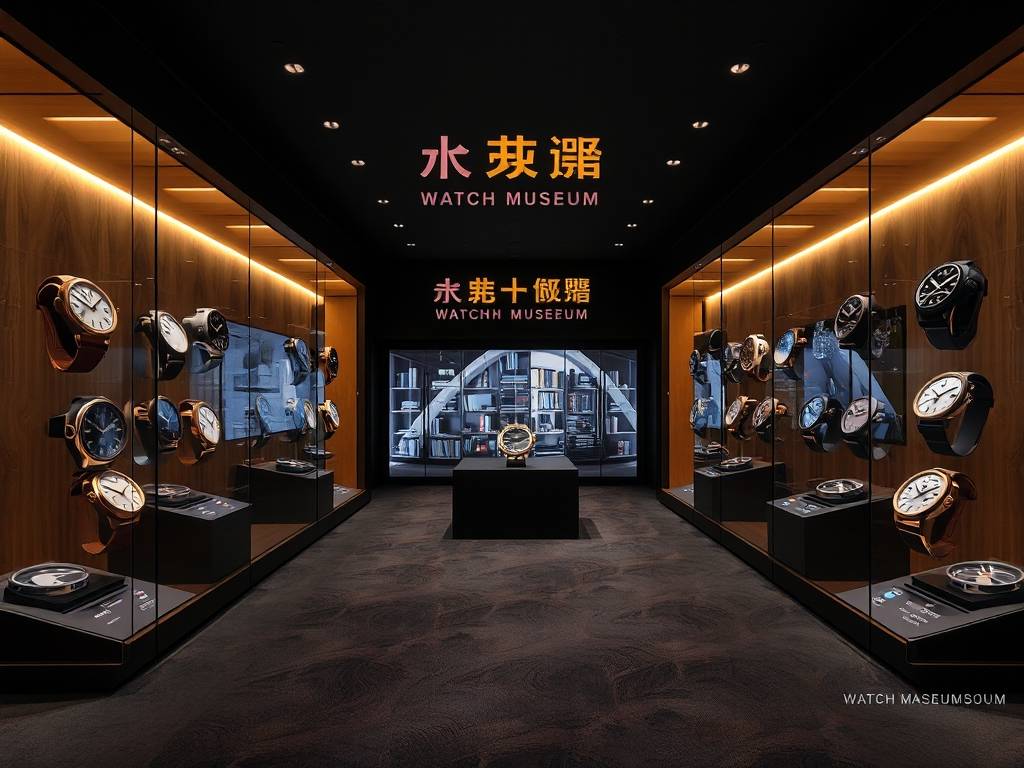
For the brands themselves, the strategic advantages are profound. The most immediate benefit is the unparalleled collection of first-party data. Traditional marketing can tell you who clicked an ad, but a virtual museum reveals behavior. It shows which timepieces users spent the most time with, which animations they re-watched, and which historical eras they explored. This data is a goldmine for refining marketing strategies, personalizing future communications, and even informing product development. Furthermore, a VR museum is a permanent, global flagship that never closes. It operates across all time zones, immune to physical disruptions, serving as a constant brand ambassador. It also provides a powerful answer to the pre-owned market. By officially archiving their heritage and telling the authentic stories behind vintage models, brands can reclaim narrative control and reinforce the enduring value of their creations, directly influencing the secondary market perception.
The journey of a user through this virtual space can be carefully guided to nurture them from a casual admirer to a qualified lead. The experience often begins in a "Historical Wing," where the brand's legacy is laid bare. Here, one can trace the evolution of design and technology, building a narrative of consistency and innovation. From there, the path leads to the "Complications Gallery," an educational hub dedicated to demystifying haute horology. Interactive modules on the chronograph, the perpetual calendar, and the moon phase allow users to manipulate virtual mechanisms, understanding the engineering marvel they represent. The final destination is the "Contemporary Salon." This space showcases the current collection. But instead of just displaying them, it integrates direct e-commerce functionality. After spending an hour understanding the brand's soul and technical prowess, seeing a modern masterpiece with a "request information" or "configure" button feels like a natural next step, not a hard sell. The entire journey builds value and context, making the price tag a reflection of the art and science the user has just intimately experienced.
Creating such an immersive environment requires a delicate balance. The technology must be advanced enough to be awe-inspiring, yet accessible enough to not alienate the audience. The key is platform-agnostic accessibility. The experience should be seamless on a high-end VR headset for the ultimate immersion, but also fully functional on a desktop computer for detailed exploration, and streamlined for a mobile device or tablet for casual browsing. The graphical fidelity is paramount; textures must be high-resolution, and lighting must be dynamic to make the metals gleam and the dials sparkle as they would in reality. However, the true magic lies in the storytelling. It's not enough to have beautiful 3D models. There must be a curated narrative. Imagine a special exhibition within the museum dedicated to a single, legendary model like the Audemars Piguet Royal Oak, tracing its five-decade history through prototypes, celebrity endorsements, and cultural milestones. Or a "Master's Studio" where a video of a real engraver at work is superimposed in the virtual space, with a hotlink to explore the specific technique used. This layered approach to content ensures there is always something new to discover, encouraging repeat visits and deepening brand loyalty.
Looking forward, the potential for Watch Museum VR is boundless, especially with the advent of the metaverse and Web3. The logical evolution is the creation of a "Luxury Horology District" within a broader metaverse platform—a digital equivalent of Place Vendôme. Here, Patek Philippe, Rolex, Jaeger-LeCoultre, and independent watchmakers could have their virtual museums side-by-side, creating a destination for enthusiasts. This could be complemented by live events: a virtual launch of a new watch hosted by the brand CEO, an exclusive Q&A session with a master watchmaker, or even a virtual watch auction integrated directly into the environment. The integration of blockchain and NFTs presents another fascinating avenue. Purchasing a physical luxury watch could come with a "digital twin"—an authenticated NFT that can be displayed in your private virtual vault within the museum or used as a key to access ultra-exclusive content and events. This fusion of physical and digital ownership creates a new dimension of value and community for collectors.
Of course, this digital leap must be taken without compromising the core values of luxury. The virtual experience must be as flawless, secure, and exceptional as the physical one. User interfaces must be intuitive and elegant, avoiding any clunkiness that could break the spell of luxury. Privacy and security are paramount; this is an environment for high-net-worth individuals to explore and transact. Furthermore, the human element remains irreplaceable. The virtual museum should not replace the boutique experience but enhance it. The platform can feature a "Concierge" button that instantly connects the user via video call to a specialist in a physical boutique, who can then guide them through the virtual space, answer specific questions, and personalize the journey. This phygital approach—blending the best of physical and digital—ensures that technology amplifies human connection rather than replacing it.
The narrative of luxury is evolving from one of pure possession to one of deep understanding and immersive experience. A luxury watch is not just a time-telling device; it is a vessel for history, a testament to craftsmanship, and a personal statement. The Watch Museum VR is the perfect medium to communicate this profound value. It breaks down the velvet rope and invites the world in, not to devalue the exclusivity, but to build a wider, more knowledgeable, and more passionate community around the art of watchmaking. It allows a brand to showcase its soul, not just its products. In this new era, the most coveted luxury brands will be those that can not only craft a masterpiece that fits on the wrist but also build a universe that captures the imagination. The future of luxury expansion is not just global; it is virtual, visceral, and limitless.




发表评论