 admin
admin Remember the dizzying, isometric jumps of the arcade classic? The frantic dodging of Coily and those pesky, color-changing cubes? For decades, Qbert existed as a beloved, pixelated memory—a testament to simple, challenging gameplay. But what if that iconic hopping could evolve? The announcement of a Qbert Reboot: 3D Platforming Adventure has sent shockwaves of excitement and a crucial question through the gaming community: can a 2D arcade legend successfully leap into the third dimension without losing its soul? This isn't just a graphical update; it's a complete reimagining that aims to solve the modern gamer's dilemma of craving fresh experiences built on rock-solid, nostalgic foundations.
From 2D Pixels to 3D Polygons: Reimagining a Classic
The core challenge for any reboot is balancing innovation with respect. The original *Qbert was defined by its isometric pyramid of cubes, a constrained playing field that created intense, puzzle-like action. Translating this into a 3D platforming adventure** requires a fundamental expansion of the game's universe while preserving its essential DNA.
The developers have wisely chosen not to abandon the iconic cube-hopping mechanic. Instead, they have expanded it. Imagine sprawling, multi-tiered pyramids, floating archipelagos of cubes in a vast sky, and ancient temple ruins where each block is a stepping stone over bottomless chasms. The jump remains the primary verb, but now it's used for exploration, intricate traversal, and environmental puzzle-solving. Early previews suggest the controls have been meticulously tuned to feel both responsive for precise platforming and weighty enough to give each hop a satisfying sense of impact, a crucial detail noted by several industry previews.
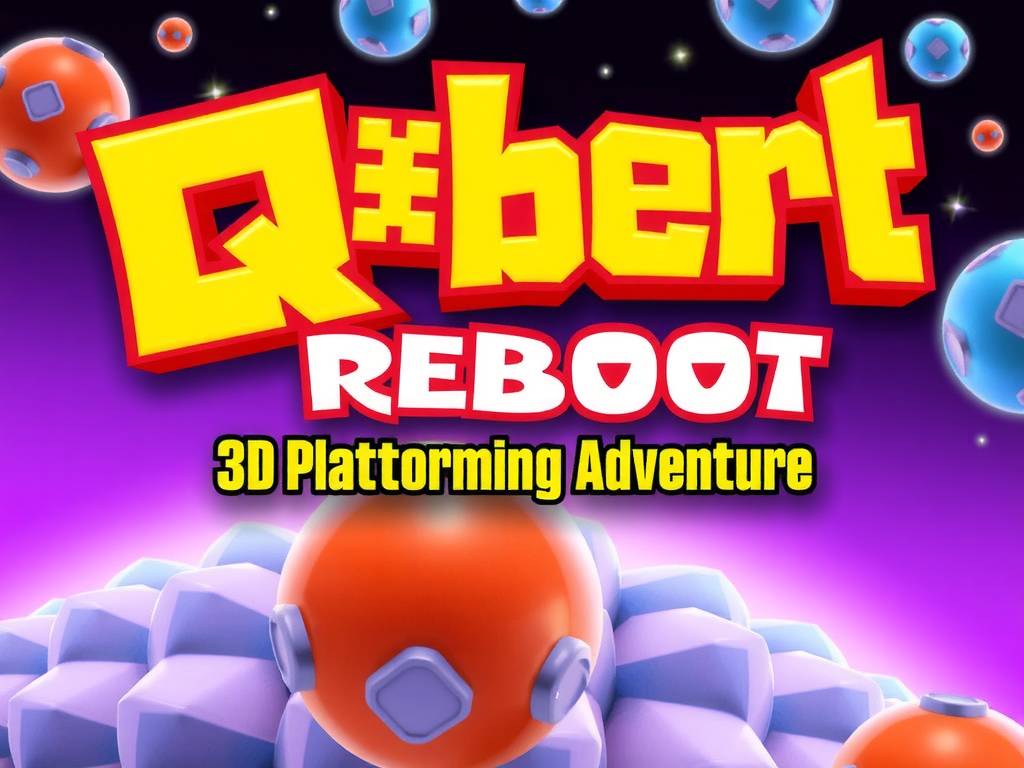
This evolution directly addresses a key user need: the desire for deeper engagement. The original game was about high scores and survival. The *Qbert reboot* seeks to add narrative context and exploratory reward. Players are no longer just hopping to change colors; they are navigating a vibrant, living world, uncovering the lore of Qbert's home planet and the true nature of those once-mindless enemies.
Mastering the New Adventure: Core Gameplay Mechanics Unveiled
At its heart, a successful platformer lives or dies by its mechanics. The *Qbert 3D platformer** introduces a suite of new abilities layered onto the classic hop, creating a skill curve that welcomes newcomers while challenging veterans.
The Dynamic Cube System: The simple color-change mechanic has been transformed. Cubes now serve multiple functions. Some may activate bridges when landed on in sequence, others might reveal hidden pathways, and special "reactor" cubes can power ancient machinery to alter the level itself. This turns every stage into an interactive puzzle-box. As veteran game designer Mark Garcia commented in a recent interview, "The best reboots find a way to make the old limitation the new feature. Here, the cube isn't just terrain; it's the primary tool for interaction."
Expanded Movement and Combat: Qbert now has a modest arsenal to deal with the expanded threat roster. A tail-swipe allows for quick, close-range defense against smaller foes. The signature hop can be charged for a powerful ground-pound, useful for stunning enemies or activating switch cubes. Most intriguing is the "Disc Dash," which allows Qbert to ride a returning disc not just for escape, but as a targeted projectile or a rapid traversal tool across gaps. These mechanics answer the player's need for varied and empowering gameplay, moving beyond pure evasion to strategic engagement.
Enemy Evolutions and Boss Encounters: Coily, Ugg, and Wrongway are back, but with expanded behaviors and new allies in the rogue's gallery. Enemies now patrol in patterns, work together, and react to the player's position in fully 3D space. The promise of epic boss battles—perhaps a giant, multi-stage fight with a mechanized Coily on a crumbling cube fortress—fulfills the modern expectation for memorable set-piece moments within a classic game revival.
Why This Reboot Matters: Bridging Generations of Gamers
The significance of the *Qbert Reboot: 3D Platforming Adventure** extends beyond a single game's release. It represents a thoughtful approach to video game preservation and innovation.
For older players, it offers a powerful hit of nostalgia, not through mere imitation, but through intelligent evolution. Seeing familiar elements recontextualized in a grand adventure provides emotional resonance. For a new generation, it serves as a gateway. It introduces them to a iconic character through modern gameplay standards they expect—rich 3D worlds, progressive ability unlocks, and a cohesive narrative. This dual appeal is the hallmark of a respectful and ambitious arcade game remake.
Furthermore, it demonstrates that classic IPs have immense value when treated with creative ambition. In an era of sequels and safe bets, a risky, genre-shifting reboot like this can revitalize a franchise and inspire other developers to look at their back catalogs with fresh eyes. It proves that with the right vision, even the most geometrically simple character can find a new dimension to explore.
*Will the new Qbert game have the original's brutal difficulty?** The developers have stated that while the core platforming will be challenging and require mastery, the adventure structure allows for a more forgiving progression. Expect checkpoints, collectible life upgrades, and a difficulty that scales with exploration, offering a tough but fair experience rather than the quarter-munching brutality of the arcade.
*Can I play this game if I've never played the original Qbert?** Absolutely. This reboot is designed as a standalone entry point. All necessary lore and mechanics are introduced in-game. Familiarity with the original will provide fun nods and a deeper appreciation for the evolution, but it is not required to enjoy the 3D platforming adventure.
Are there any multiplayer or cooperative modes planned? While the main campaign is a single-player experience, early concept art has hinted at potential cooperative challenge maps where players work together to navigate complex cube-based puzzles under a time limit. This would be a post-launch consideration based on player feedback.
The journey from a static pyramid to a dynamic, explorable universe is a monumental leap. The *Qbert Reboot: 3D Platforming Adventure** stands as a bold experiment in game design, aiming to capture the addictive purity of its origins while delivering the depth and wonder of a modern adventure. It seeks to prove that some classics aren't meant to be left in the past—they're waiting for the right moment to hop forward into a thrilling new future. By addressing the core desire for both nostalgia and novelty, this project has the potential to not just reboot a character, but to redefine what a classic game revival can truly achieve.




发表评论