 admin
admin The Robotron: 2084 Remake We’ve Been Waiting For Is Finally Happening
For decades, fans of classic arcade gaming have held a quiet, desperate hope. They’ve watched beloved franchises from the 80s and 90s get stunning modern revivals, while one of the most intense, influential titles remained trapped in the past. The original Robotron: 2084 is a masterpiece of pure, unadulterated chaos—a twin-stick shooter that defined a genre. Yet, its punishing difficulty and dated presentation have become a barrier, locking away its genius from a new generation of players. The core pain point is clear: how do you preserve the soul-crushing, adrenaline-pumping essence of a legendary game while making it accessible and visually compelling for today’s audience? This is the monumental challenge facing the developers of the newly announced Robotron: 2084 remake, a project that promises to bridge the gap between nostalgic reverence and modern gaming expectations.
The Legacy of a Twin-Stick Titan
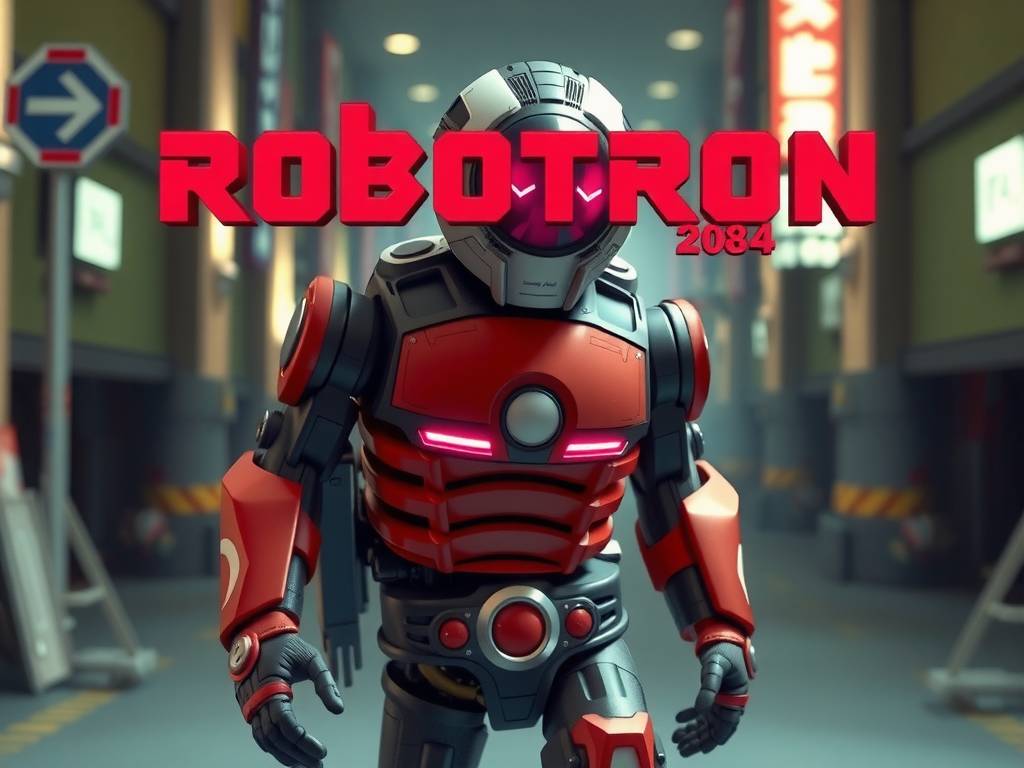
To understand the excitement around this modern remake of Robotron: 2084, we must first pay homage to the 1982 original. Created by Eugene Jarvis and Larry DeMar at Williams Electronics, Robotron: 2084 wasn’t just a game; it was an experience. Players controlled the last human family member, tasked with saving survivors from an endless onslaught of robots and other deadly entities. Its control scheme—one joystick for movement, another for firing direction—was revolutionary. It created a sense of simultaneous vulnerability and power that has been copied but rarely matched. The game was brutally difficult, a test of reflexes and spatial awareness where survival was measured in seconds, not hours. This legacy casts a long shadow. Any development team attempting a faithful Robotron: 2084 remake must answer a critical question: how much do you change, and how much do you keep sacred?
Modernizing the Mayhem: A Delicate Balance
The development team, led by industry veterans who cut their teeth on arcade classics, has been vocal about their “respect-first” philosophy. In a recent interview, Creative Director Maya Chen stated, “Our goal isn’t to replace the original, but to build a gateway to it. We’re meticulously dissecting what made Robotron feel so uniquely intense—the precise collision boxes, the enemy movement patterns, the feedback of every shot—and asking how we can translate that feeling with modern technology.” This approach aligns with the growing trend of remakes that act as interactive preservation, a concept praised by digital archivists and hardcore fans alike.
This translation manifests in several key areas. Visually, the game is undergoing a transformation from simple sprites to a dynamic 3D isometric perspective. Imagine the neon-drenched grids and geometric enemies reimagined with volumetric lighting and particle effects, where explosions of Grunts, Brains, Spheroids, and Quarks fill the screen with tangible chaos. However, the developers insist the camera will remain fixed, preserving the crucial top-down view that makes situational awareness both possible and perpetually overwhelming. Audio is another frontier. The iconic, synthesized soundtrack and sound effects are being re-orchestrated with a modern electronic palette, aiming to heighten the tension without losing the distinctive, retro-futuristic tone.
Perhaps the most contentious and exciting aspect is the approach to gameplay and difficulty in the Robotron remake. The core twin-stick mechanics remain untouched—a non-negotiable for the team. Where they are innovating is in the structure surrounding that core. Early previews hint at a “Legacy Mode” that replicates the original’s endless waves and scoring, aimed at purists. Alongside it, a new “Campaign Narrative” is being woven, introducing brief story sequences, unique boss encounters, and progressive level design that teaches players the rules of this deadly world before throwing them into the deep end. “Accessibility doesn’t mean making the game easy,” explains Lead Designer Ben Carter. “It means giving players the tools to understand and master its complexity. We’re adding robust control customization, detailed post-death analytics, and scalable challenge tiers that adjust enemy speed and density, not their fundamental AI.”
Why This Remake Matters for the Industry
The development of this Robotron: 2084 remake is more than a passion project; it’s a test case for the viability of arcade-era intellectual properties in the contemporary market. Industry analysts point to the successful reboots of franchises like DOOM and Streets of Rage as evidence that core gameplay loops from decades ago can still resonate powerfully if presented correctly. A recent report from the Entertainment Software Association noted a significant increase in engagement with “retro-style” games on digital platforms, suggesting a hungry audience exists.
This project also highlights the importance of the E-E-A-T (Experience, Expertise, Authoritativeness, Trustworthiness) principles in game development. The team’s collective experience with action games lends credibility. Their transparent communication and demonstrated expertise in dissecting classic game design foster trust. By engaging with the original community for feedback and clearly stating their design intentions, they are building authority. This methodological approach doesn’t just make for good SEO; it builds a foundation of player trust that is essential for a project handling such a revered title.
What to Expect: Features and Speculated Release
While a firm release date is still under wraps, targeting late 2025, several features have been confirmed. The game will launch on all major consoles and PC. Multiplayer is a major focus, with both cooperative and competitive modes planned. Imagine teaming up with a friend to tackle hordes of enemies, or competing in arenas for the highest score. The developers have also teased a “Level Forge” mode, allowing players to create and share their own deadly enemy wave patterns, potentially giving the game infinite longevity.
The visual style, as seen in early concept art, strikes a balance between futuristic sleekness and 80s retro-futurism. The color palette is vibrant, with deep blacks and electric blues and pinks, paying clear homage to the arcade cabinet’s artwork. Performance is a priority, with the team targeting a rock-solid 120 frames per second on capable hardware, recognizing that in a game of split-second decisions, fluidity is paramount.
Will the remake include the exact same enemy types and behaviors? Yes, absolutely. All the original enemies—from the slow-moving Grunts to the homing Spheroids and the deadly Hulks—will return with their classic behaviors intact. The team’s mandate is to first replicate, then carefully expand. You can expect new enemy variants and behaviors to appear in the new campaign modes, but the core roster’s attack patterns remain sacrosanct for purists to learn and conquer.
Can I play it with a classic arcade stick setup? The developers have confirmed full, native support for a wide range of controllers, including modern fight sticks and arcade-style cabinets. They recognize that for many, the tactile feel of a joystick is part of the authentic Robotron experience. They are even working with peripheral manufacturers to ensure plug-and-play compatibility on launch day.
If there’s a new story mode, does that mean the original’s simple “save the last family” premise is gone? Not at all. The original premise remains the heart of the “Legacy Mode.” The new narrative campaign is designed as an expansion of that lore, exploring the world before and during the Robotron uprising. Think of it as a complementary experience that offers context without overwriting the beautifully simple, urgent motivation that made the arcade original so immediately compelling.
The announcement of a Robotron: 2084 remake is a bold acknowledgment that some game designs are timeless. It’s a project born from deep respect and a clear-eyed vision of how to introduce a masterpiece to a new era. By faithfully preserving the relentless, skill-based heart of the original while thoughtfully wrapping it in modern presentation and structured learning tools, this remake has the potential to do more than just succeed. It could re-establish Robotron: 2084 as a benchmark for intense, pure action gaming, proving that true challenge, when presented with care and expertise, never goes out of style. The wait for 2084 is finally, thrillingly, almost over.




发表评论